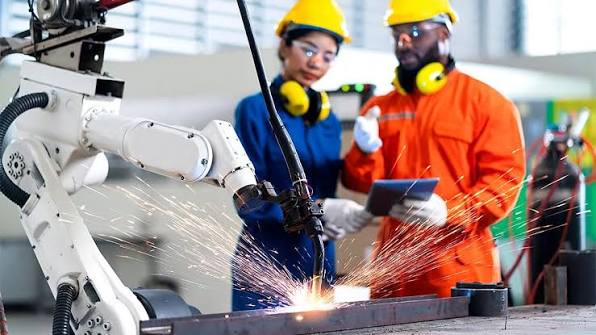
Modern manufacturing depends on accuracy, consistency, and efficient quality control. As components become more complex and production requirements become more demanding, manufacturers need reliable ways to check dimensions and identify potential issues during the machining process. Inspection technology has therefore become an important part of many production environments.
Traditional inspection methods can require components to be removed from a machine and taken to a separate measuring area. While this approach can still be useful, it may add handling time and create additional opportunities for measurement differences. On-machine inspection provides an alternative approach by allowing measurements to be performed closer to where manufacturing takes place.
Understanding On-Machine Inspection
On-machine inspection involves using measurement technology directly within or alongside a machining environment. Instead of relying entirely on separate inspection equipment, manufacturers can check selected dimensions while a component remains positioned on the machine.
This approach can be particularly useful when working with large, complex, or high-value components. Moving such parts between machining and inspection areas can require additional time and equipment. Measuring them in position can simplify parts of the quality-control process.
The exact inspection method depends on the machine, component, measurement requirements, and production environment. Manufacturers should therefore select technology according to their specific application rather than relying on a single inspection approach for every project.
Improving Measurement Accuracy
Accurate measurement is essential when manufacturing components to precise specifications. Small dimensional differences can affect how individual parts fit together or perform in a finished product.
A properly configured inspection process can help identify dimensional deviations at different stages of production. Early detection gives operators an opportunity to investigate potential problems before additional machining or finishing work is completed.
Using cnc inspection as part of a broader quality-control strategy can help manufacturers monitor important dimensions and maintain consistency across production work.
Reducing Unnecessary Handling
Component handling can become a significant consideration in manufacturing, especially when parts are heavy, large, or difficult to reposition. Each additional movement can require time, equipment, and careful alignment.
On-machine inspection can reduce the need to transfer a component to another location for certain measurements. Keeping the workpiece in its existing setup may also make the inspection process more convenient in suitable applications.
Reducing unnecessary handling does not replace careful inspection procedures. Instead, it can complement them by making certain measurement tasks more efficient.
Supporting Production Efficiency
Quality control and productivity are closely connected. If inspection only takes place after a component has completed a long machining process, discovering an error at the end can result in additional work or material waste.
Inspection during production can provide useful information earlier in the process. When a dimensional issue is detected, operators may be able to make adjustments before completing the entire manufacturing cycle.
This can support a more responsive production workflow, particularly for precision components where dimensional accuracy is important.
Applications Across Different Industries
Precision inspection technology can be relevant across many manufacturing sectors. Industries producing automotive components, aerospace parts, industrial equipment, energy-related components, and precision engineering products may all have applications where dimensional verification is important.
The inspection requirements can vary significantly between industries. Some components may require checks on basic dimensions, while others may involve complex surfaces, multiple reference points, or tight tolerances.
For this reason, inspection systems should be selected according to the component geometry and the quality standards that apply to the specific manufacturing process.
Integrating Inspection With CNC Manufacturing
CNC machining allows manufacturers to produce complex components with a high degree of repeatability. However, machining accuracy still needs to be monitored through appropriate quality-control procedures.
Integrating measurement into the machining workflow can help connect production and inspection more closely. Measurements can provide information about the condition of a component and, depending on the system, support decisions about subsequent machining operations.
Proper calibration, setup, programming, and operator training remain important. Inspection technology is most effective when it forms part of a structured quality-management process.
The Importance of Consistent Quality Control
Inspection should not be viewed as a final step only. Consistent quality control throughout manufacturing can help identify issues before they become larger production problems.
Manufacturers can establish inspection procedures based on factors such as component complexity, production volume, required tolerances, and industry standards. Regular monitoring can also provide useful information for improving production processes over time.
Combining reliable machining practices with suitable measurement technology can create a more controlled manufacturing environment.
Conclusion
Modern manufacturing requires a balance between productivity and precision. On-machine inspection can help manufacturers measure components closer to the machining process, reduce unnecessary handling, identify dimensional issues earlier, and support consistent quality control.
As manufacturing technology continues to develop, inspection methods will remain an important part of producing reliable and accurately manufactured components. Choosing the right inspection approach for each application can help businesses maintain quality while making production workflows more efficient.