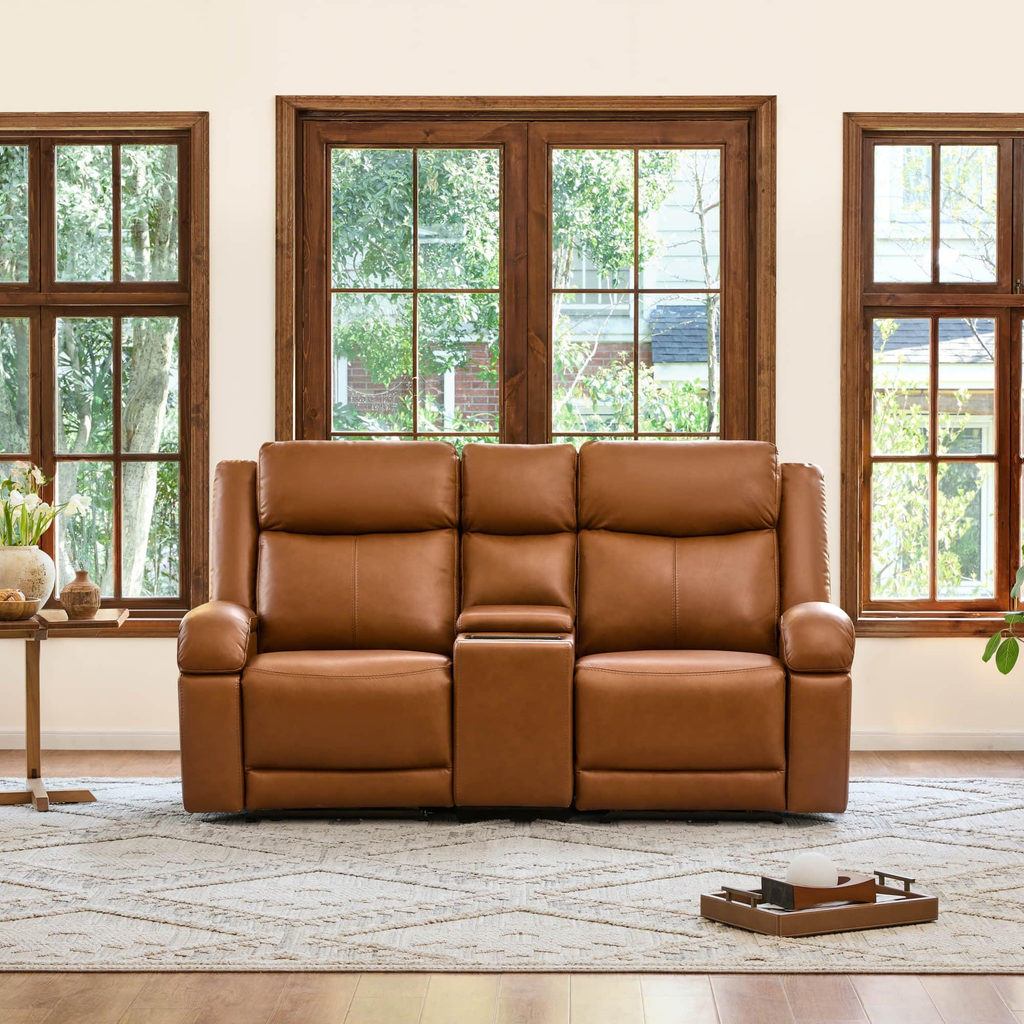
The recliner has a reputation problem. For decades it was the chair that promised comfort and delivered a silhouette that swallowed the room — bulky, overstuffed, and impossible to place without pushing everything else off balance. Leather carried its own baggage too: cold in winter, sticky in summer, and usually reserved for offices and studies. Put the two together and you might expect a piece destined for a basement rather than a living room.
That expectation is out of date. A well-made leather sofa recliner now delivers the depth and support people want at the end of a long day without demanding half a wall of empty floor. Better mechanisms, denser foam, and more thoughtful proportions have turned what used to be a compromise into a genuine anchor for a living space.
What follows is the practical side of choosing one: how much clearance the chair actually needs, what leather does for comfort as it ages, which powered features earn their place, and how to make the piece feel designed into the room instead of parked in it.
The Space Problem Recliners Used to Create
Traditional recliners need room to lean back, and that geometry is what made them awkward. A classic mechanism sweeps the backrest rearward, which means leaving roughly eighteen inches of empty space behind the chair. In a small living room, that dead zone is often the difference between a layout that works and one that feels permanently cramped.
A leather sofa recliner built on a wall-hugger frame solves the geometry differently. Instead of tipping backward, the seat glides forward and the back follows a steeper arc, so the chair can sit a few inches from the wall and still reach a full recline. The footprint barely changes, but the usable floor in front of it does. That single design choice opens up placements that were previously off limits — beside a window, along a narrow wall, or at the end of a sofa run where nothing else would fit.
Before you shop, mark the chair’s position with painter’s tape and test it with your own stride. Leave at least thirty inches for a walking path, check which side the power cord exits, and confirm that a door swing or cabinet drawer nearby will not collide with the extended footrest. A few minutes with a tape measure prevents the most common post-purchase regret.
Why Leather Changes the Comfort Equation
Upholstery choice matters more than most shoppers expect. Fabric can be soft and forgiving, but it also traps dust, holds odors, and shows wear in the places bodies press most often. Leather behaves differently. It is a dense, resilient surface that distributes weight across the hide rather than compressing into itself, which is why leather seating tends to keep its shape through years of daily use.
Breathability and Temperature
Good leather is not the sticky material of cheap furniture showrooms. Quality hides are breathable, and they warm to body temperature within minutes instead of fighting it. In summer the surface stays relatively cool to the touch; in winter it takes on warmth quickly rather than feeling like a sheet of glass. The difference comes down to the finish and the grade of the hide, which is why a well-tanned leather outperforms a heavily coated one in everyday comfort.
How the Surface Ages
Fabric tends to fail visibly — pilling, fading, fraying along seams. Leather develops instead. Natural oils from skin and regular use deepen the color, soften the hand, and create a patina that makes the piece look personal rather than worn out. Small surface marks usually blend in with a little conditioner, and the material can be cleaned repeatedly without going thin the way some woven textiles do.
Living With Spills and Pets
Anyone who has tried to lift coffee out of a fabric cushion will appreciate a surface that wipes clean. Leather gives you a minute to blot rather than a permanent reminder. Pet hair brushes off instead of weaving into the weave, and claws are less likely to catch when the hide is smooth. A conditioning treatment twice a year is enough to keep it supple, and keeping the chair out of direct sun protects the color over the long term.
Power Features That Actually Change Daily Use
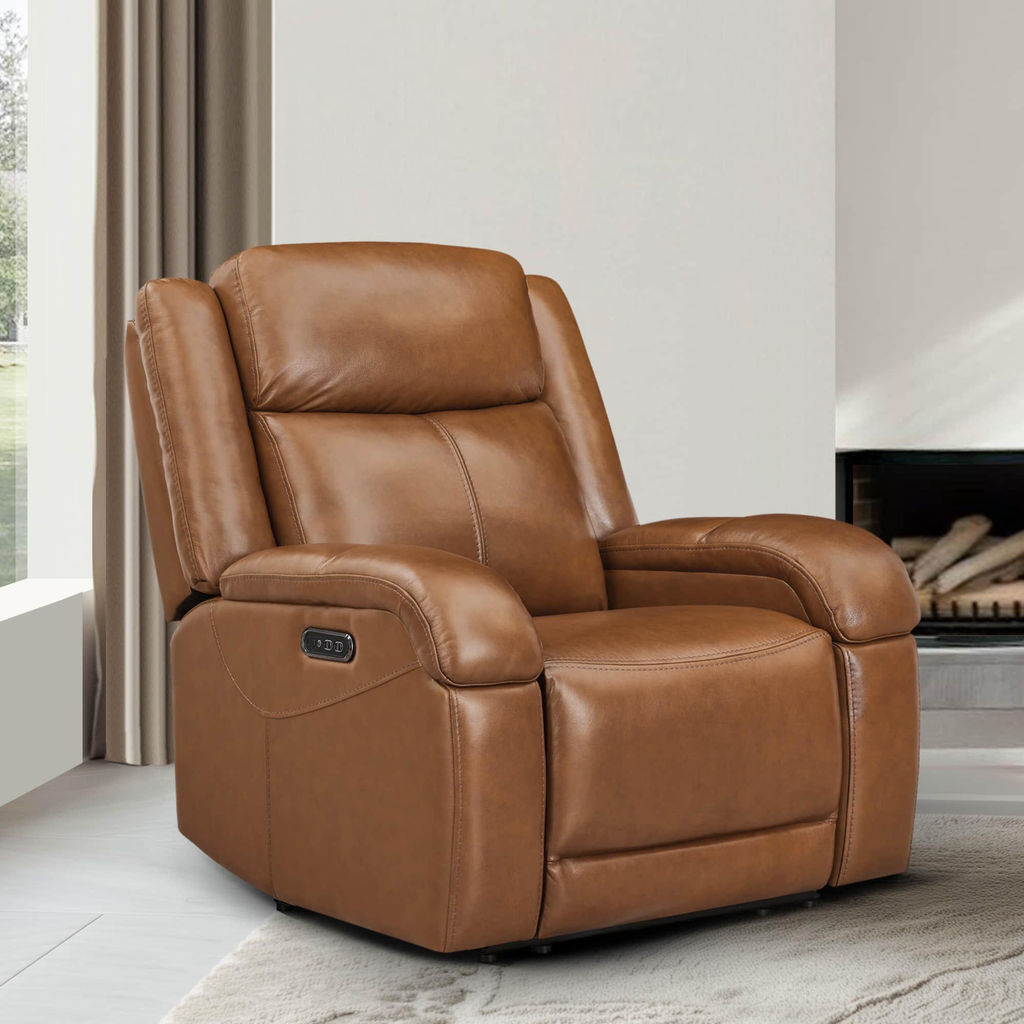
The case for power is simpler than it sounds: manual handles lock you into a few preset angles, while a motor lets you stop wherever your back feels best. Reading, napping, watching a screen mounted high on the wall — each wants a different angle, and most people adjust far more often than they expect. A powered footrest also closes gently instead of snapping back, which matters in a household with small children or pets.
The feature that surprises people most is an adjustable headrest. A fixed back and a fixed headrest force the neck into one position, and that is usually the first place discomfort shows up. A headrest that tilts independently lets the spine stay neutral while the eyes find the screen. Brands such as CHITA LIVING have made this kind of adjustment common in the category, pairing it with wall-hugger frames so the chair stays compact without giving up range.
Think about wiring before delivery, not after. Decide which side the outlet sits on, add a surge protector if the chair shares a circuit, and keep the remote in a dedicated tray so it does not vanish into the cushions. If the chair includes heat or massage, treat those as occasional comforts rather than daily necessities — they are pleasant, but the recline and headrest are what you will use every single day.
Seat Depth and the Taller Sitter
Recliners are frequently chosen by people who are taller than average, and that changes what to look for. A short seat pan leaves the back of the knee unsupported and pushes the pelvis forward, which is exactly the posture a recliner is supposed to correct. Check that the seat depth matches your thigh length when your back is against the cushion, and confirm that the footrest reaches past the ankle rather than stopping at the calf. If two people of very different heights will share the chair, the powered headrest becomes useful because it lets each person tune the neck angle independently of the backrest. Cushion density is the other variable: a firmer seat holds a heavier sitter higher and keeps the recline angle from collapsing into overextension.
Pulling the Room Together
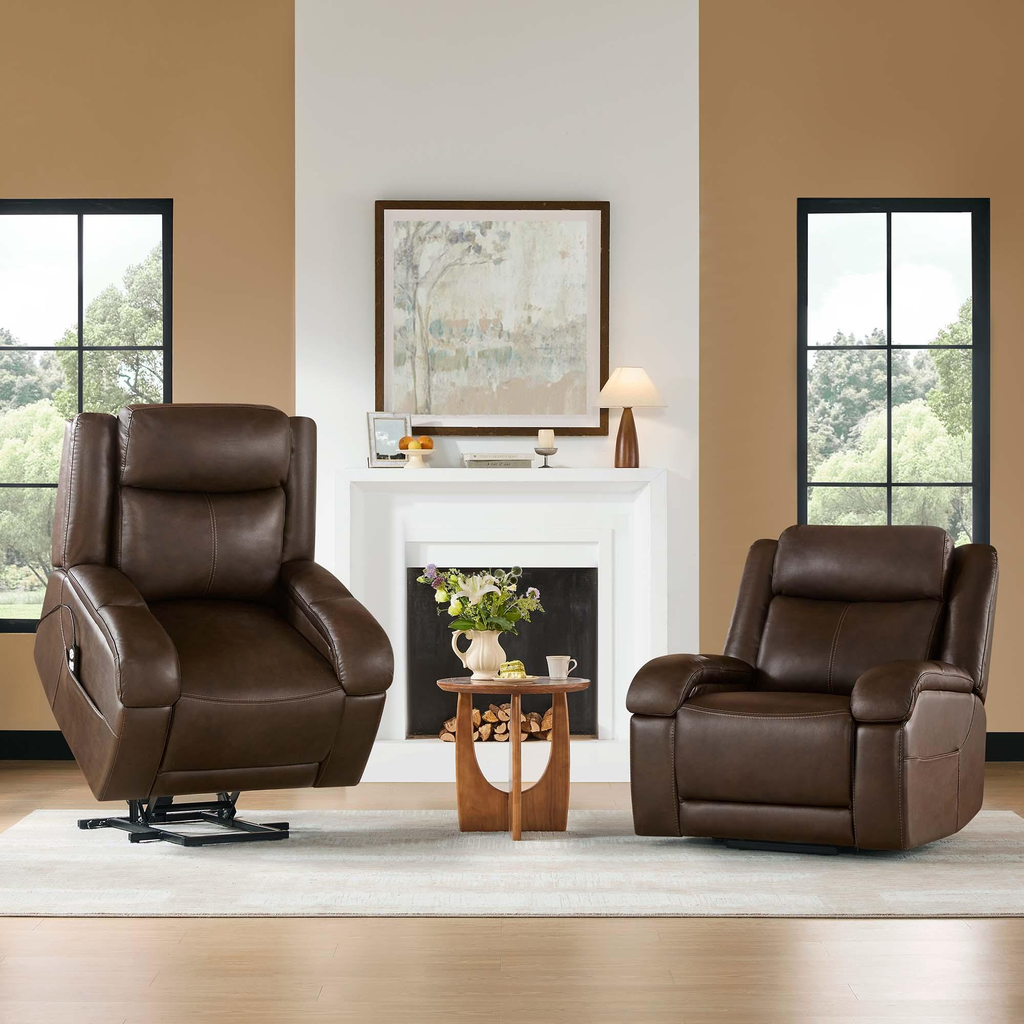
A recliner reads as intentional when its visual weight matches the rest of the room. Oversized rolled arms in a small living room will always look like a guest who stayed too long; slim tracks and clean lines perform the same function with far less bulk. Color does similar work. Saddle, cognac, and warm brown leather soften a pale room, while black or deep espresso holds its own against saturated walls and dark wood floors.
Pairing With an Existing Sofa
You do not need a matching suite, and in most rooms a matched set looks showroom-stiff. Instead, echo one detail — a similar leg height, a comparable seat depth, a related wood tone — and let the leather be the contrast. A fabric sofa in oatmeal next to a cognac recliner feels collected rather than purchased. Add a side table at the same height as the chair’s arm, a floor lamp behind the shoulder, and a rug large enough to sit under both pieces so the grouping has a visible boundary.
Finally, leave a little breathing room. A chair pushed tight into a corner feels like storage; one set slightly off the wall and angled toward the sofa feels like an invitation. Fifteen degrees of angle is usually enough to connect the recliner to the conversation without blocking the path through the room.
A Note on Care
Leather rewards a small amount of routine attention. Dust the surface weekly with a dry microfiber cloth so grit does not work into the grain, wipe spills with a damp cloth rather than a soaked one, and condition the hide twice a year with a product made for finished leather. Keep the chair out of direct afternoon sun, since ultraviolet light fades dye faster than any other cause. Avoid placing it directly in front of a heating vent, which dries the material from the underside and can cause cracking along the seams. With that routine, a good hide will look better in five years than a cheaper one looks in one.
Comfort You Do Not Have to Hide
The best seating in a home should be the seating people actually use. A leather sofa recliner earns that role when it is chosen with the room in mind: a wall-hugger frame for tight clearance, a hide that improves with handling, and power adjustments that match the way you read, rest, and watch. None of those details are extravagant on their own, but together they remove the small daily frictions that make a chair feel like a compromise.
Start with measurements, choose leather for the long run rather than the first impression, and treat the chair as part of the layout instead of an afterthought. Do that, and the piece stops being the recliner in the corner and becomes the seat everyone gravitates toward.